Trump Signs Iran Hat as Graham Weighs Foreign Policy Impact
Sen. Lindsey Graham joined President Trump in a photo with a signed 'Make Iran Great Again' hat as demonstrations continue across Iran against the regime.
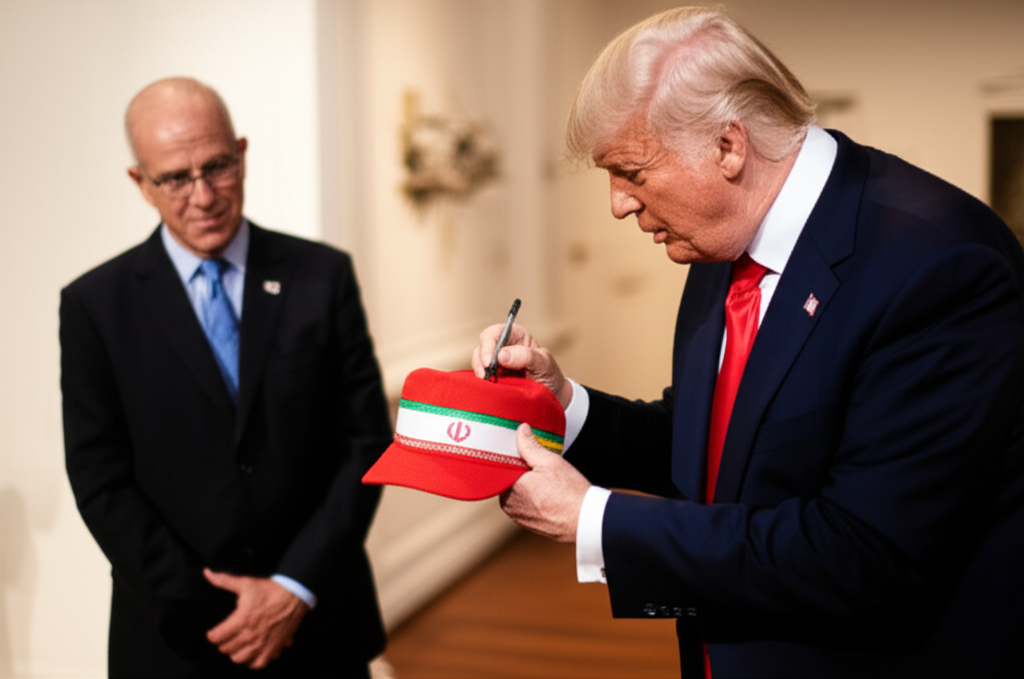
A black baseball cap bearing an unexpected message sat on President Donald Trump’s desk Monday morning, its signature still drying as Sen. Lindsey Graham flashed a thumbs up beside him. The “Make Iran Great Again” hat, signed by Trump himself, captured a moment that seemed to crystallize the administration’s approach to the ongoing demonstrations sweeping across Iran.
The photograph, posted to Graham’s social media accounts, showed South Carolina’s senior senator standing alongside Trump as the president held the customized hat. The image quickly spread across political circles, drawing attention not just for its symbolism but for what it suggested about American foreign policy toward the Islamic Republic.
“Another great day with @POTUS who has brought America back, stronger than ever, at home and abroad,” Graham wrote in his post. “God bless our Commander in Chief and all of the brave men and women who serve under him.”
The timing of the photograph proved significant, arriving as nationwide demonstrations in Iran continued to challenge the regime’s authority. Protesters have taken to the streets across multiple cities, voicing frustration with political corruption and economic hardship that has persisted despite various government promises of reform.
Graham, who serves on the Senate Foreign Relations Committee, has long advocated for a firm stance toward Iran’s government. His presence in the photograph signals continued Senate Republican support for Trump’s approach to Middle Eastern diplomacy, even as critics question whether symbolic gestures translate into effective policy.
The hat itself represents a curious twist on Trump’s signature campaign slogan, transforming “Make America Great Again” into a message directed at Iran’s people rather than its government. Political observers noted the distinction, suggesting it reflects an attempt to separate Iranian citizens from their leadership in American diplomatic messaging.
For Charleston residents, Graham’s involvement brings a local dimension to international affairs that often feel distant from the Lowcountry’s daily concerns. The senator’s foreign policy positions have long reflected South Carolina’s military heritage, with significant installations like Joint Base Charleston housing personnel who could be affected by Middle Eastern conflicts.
The photograph emerged against a backdrop of escalating tensions between Washington and Tehran, with Supreme Leader Ayatollah Ali Khamenei recently dismissing protesters as “rioters” in remarks clearly intended to delegitimize their grievances. Iranian authorities have struggled to contain demonstrations that began in major cities but have since spread to smaller communities across the country.
Demonstrators have focused their anger on corruption within government institutions, rising inflation that has eroded purchasing power, and restrictions on personal freedoms that particularly affect younger Iranians. Videos shared on social media platforms show crowds chanting slogans critical of the regime, though government internet restrictions have made comprehensive coverage difficult.
Trump’s decision to sign the hat suggests his administration views the protests as an opportunity to pressure Iran’s government while expressing solidarity with Iranian citizens. The gesture follows a pattern of symbolic actions designed to communicate American positions without formal diplomatic statements that might complicate future negotiations.
Graham’s endorsement of Trump’s approach reflects broader Republican sentiment in Congress, where many members have called for stronger measures against Iran’s government. The senator has previously supported sanctions targeting Iranian officials and institutions, arguing that economic pressure represents the most effective tool for encouraging political change.
The “Make Iran Great Again” message itself raises questions about American intentions toward regime change versus reform. Political analysts suggested the slogan could be interpreted as supporting Iranian self-determination while avoiding explicit calls for government overthrow that might complicate diplomatic efforts.
For many in Charleston’s Iranian-American community, the photograph represents both hope and concern. Some appreciate American attention to their homeland’s struggles, while others worry that foreign involvement might provide Iran’s government with justification for further crackdowns on dissent.
Local community leaders have organized quiet gatherings to support Iranian protesters, much like Charleston’s tradition of coming together during significant moments, though they remain cautious about drawing unwanted attention to relatives still living under the Iranian regime.
The hat signing also reflects Trump’s preference for visual communication that bypasses traditional diplomatic channels. Previous administrations might have issued carefully worded statements through State Department officials, but Trump’s approach emphasizes direct, symbolic gestures that generate immediate media attention.
Graham’s social media post concluded with a declaration that resonated beyond foreign policy: “I’m proud to be an American.” The statement, while simple, underscored the senator’s view that American leadership requires active engagement with global challenges, even when solutions remain elusive.
As demonstrations in Iran continue and international attention focuses on the regime’s response, the signed hat serves as a tangible reminder of how American politicians choose to express support for democratic movements abroad. Whether such gestures influence events on Iranian streets remains an open question, but they certainly communicate American sympathies to audiences both domestic and international.
The photograph’s circulation through social media channels ensures its message will reach Iranian protesters despite government attempts to control information flow, potentially providing encouragement to those risking their safety for political change.